
Is All Vegan Food Healthy?
Michael Greger M.D. FACLM via Nutrition Facts – How do healthier plant-based diets compare to unhealthy plant foods and animal foods when it comes to diabetes risk?
In my video on flexitarians, I discuss how the benefits of eating a plant-based diet are not all-or-nothing. “Simple advice to increase the consumption of plant-derived foods with compensatory [parallel] reductions in the consumption of foods from animal sources confers a survival advantage”— a live-longer advantage. The researchers call it a “pro-vegetarian” eating pattern, one that’s moving in the direction of vegetarianism, “a more gradual and gentle approach.”
The benefits of eating a plant-based diet are not all-or-nothing.
If you’re dealing with a serious disease, though, like diabetes, completely “avoiding some problem foods is easier than attempting to moderate their intake. Clinicians would never tell an alcoholic to try to simply cut down on alcohol. Avoiding alcohol entirely is more effective and, in fact, easier for a problem drinker…
Paradoxically, asking patients to make a large change may be more effective than making a slow transition. Diet studies show that recommending more significant changes increases the chances that patients can accomplish [them]. It may help to replace the common advice, ‘all things in moderation’ with ‘big changes beget big results.’ Success breeds success.
After a few days or weeks of major dietary changes, patients are likely to see improvements in weight and blood glucose [sugar] levels—improvements that reinforce the dietary changes that elicited them. Furthermore, they may enjoy other health benefits of a plant-based diet” that may give them further motivation.
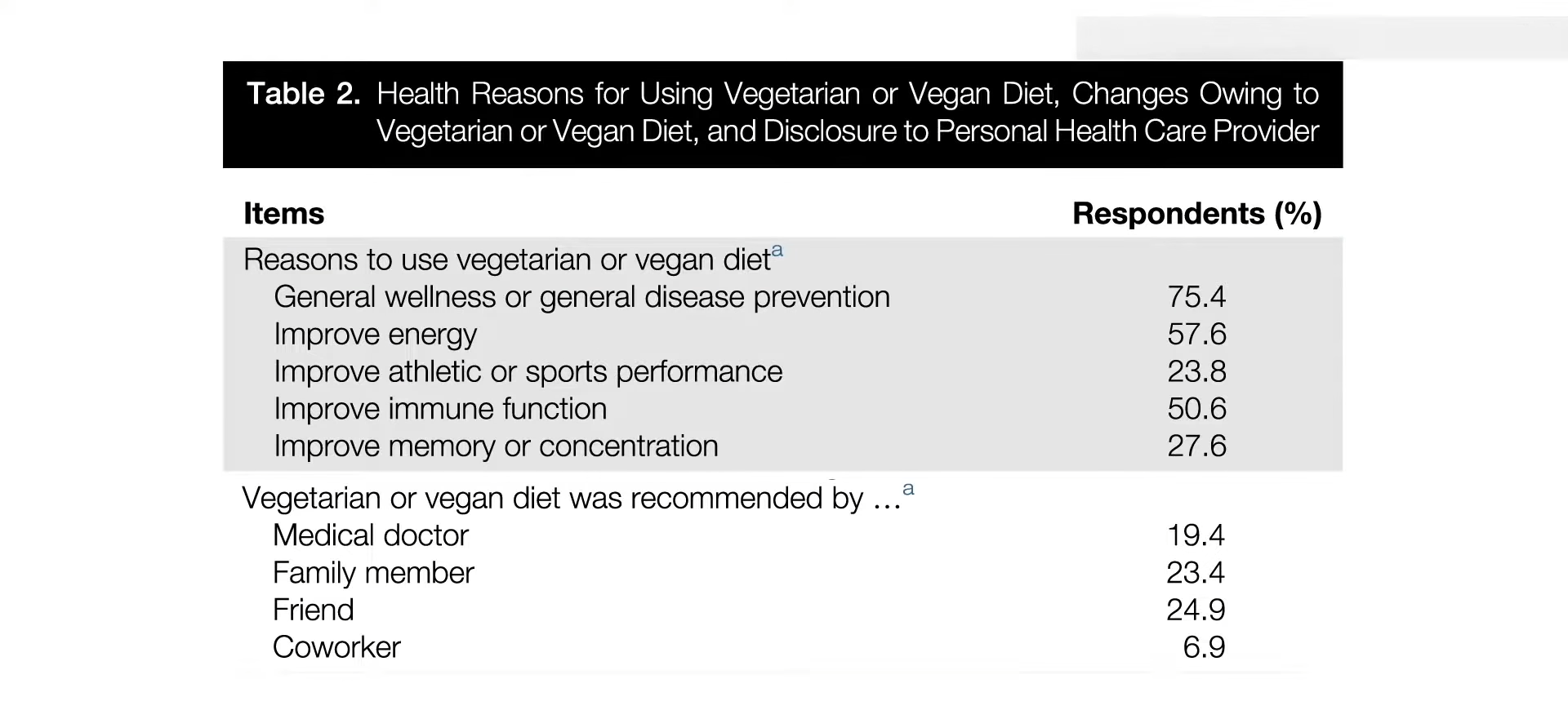
As you can see below and at 1:43 in my video Friday Favorites: Is Vegan Food Always Healthy?, those who choose to eat plant-based for their health say it’s mostly for “general wellness or general disease prevention” or to improve their energy levels or immune function, for example.
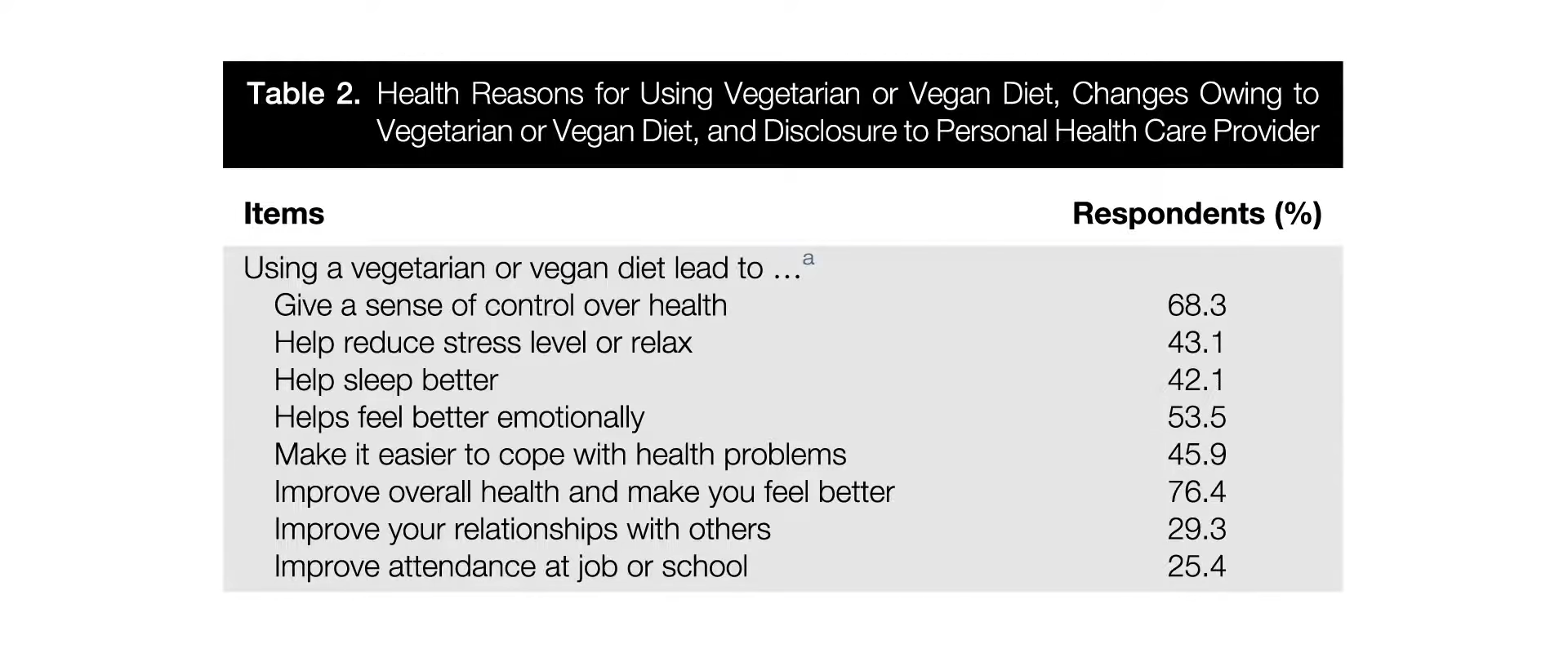
They felt it gives them a sense of control over their health, helps them feel better emotionally, improves their overall health, makes them feel better, and more, as shown below and at 1:48. Most felt it was very important for maintaining their health and well-being.
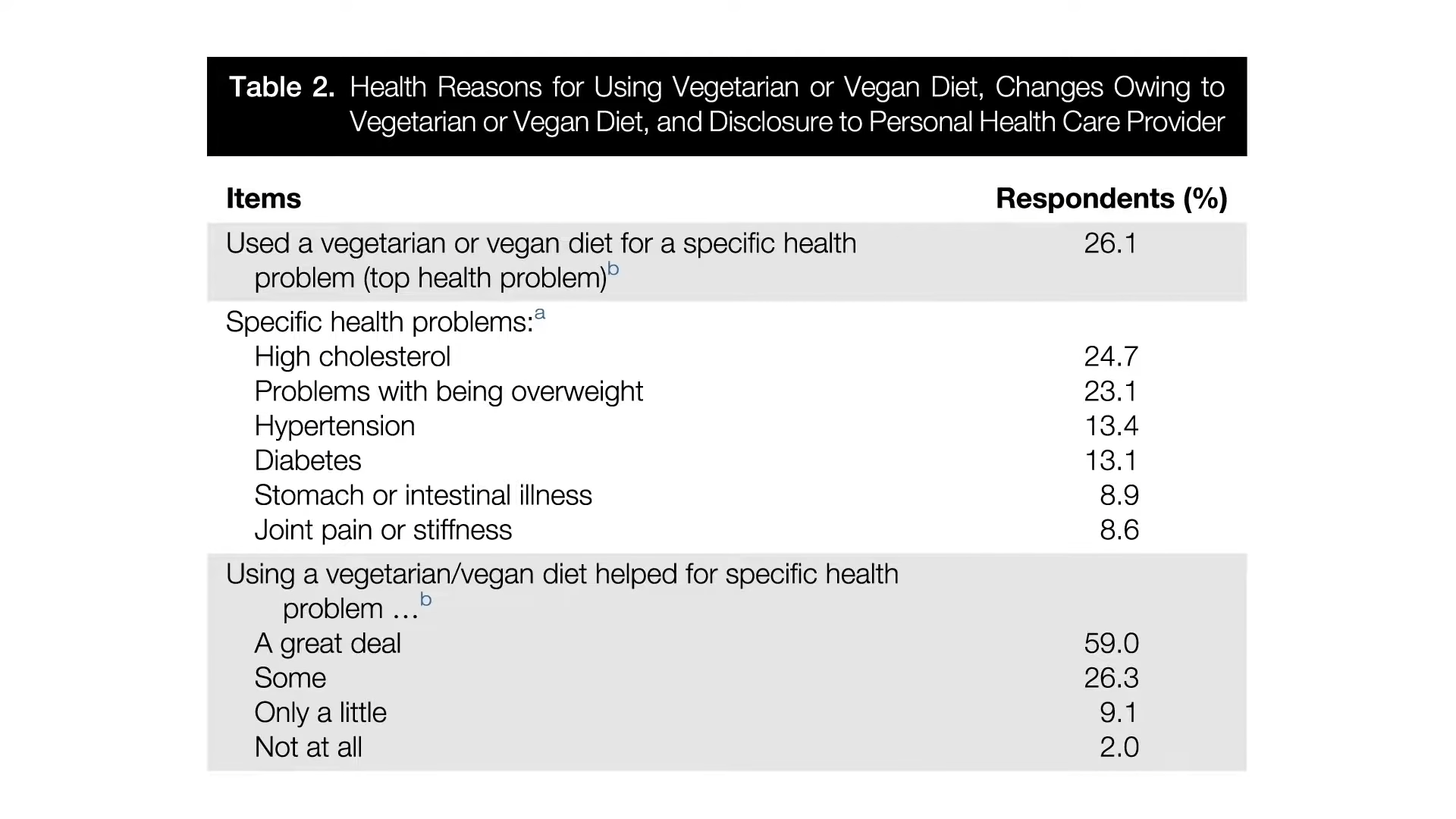
For the minority who used it for a specific health problem, mostly high cholesterol or weight loss, followed by high blood pressure and diabetes, most reported they felt it helped a great deal, as you can see below and at 2:14.
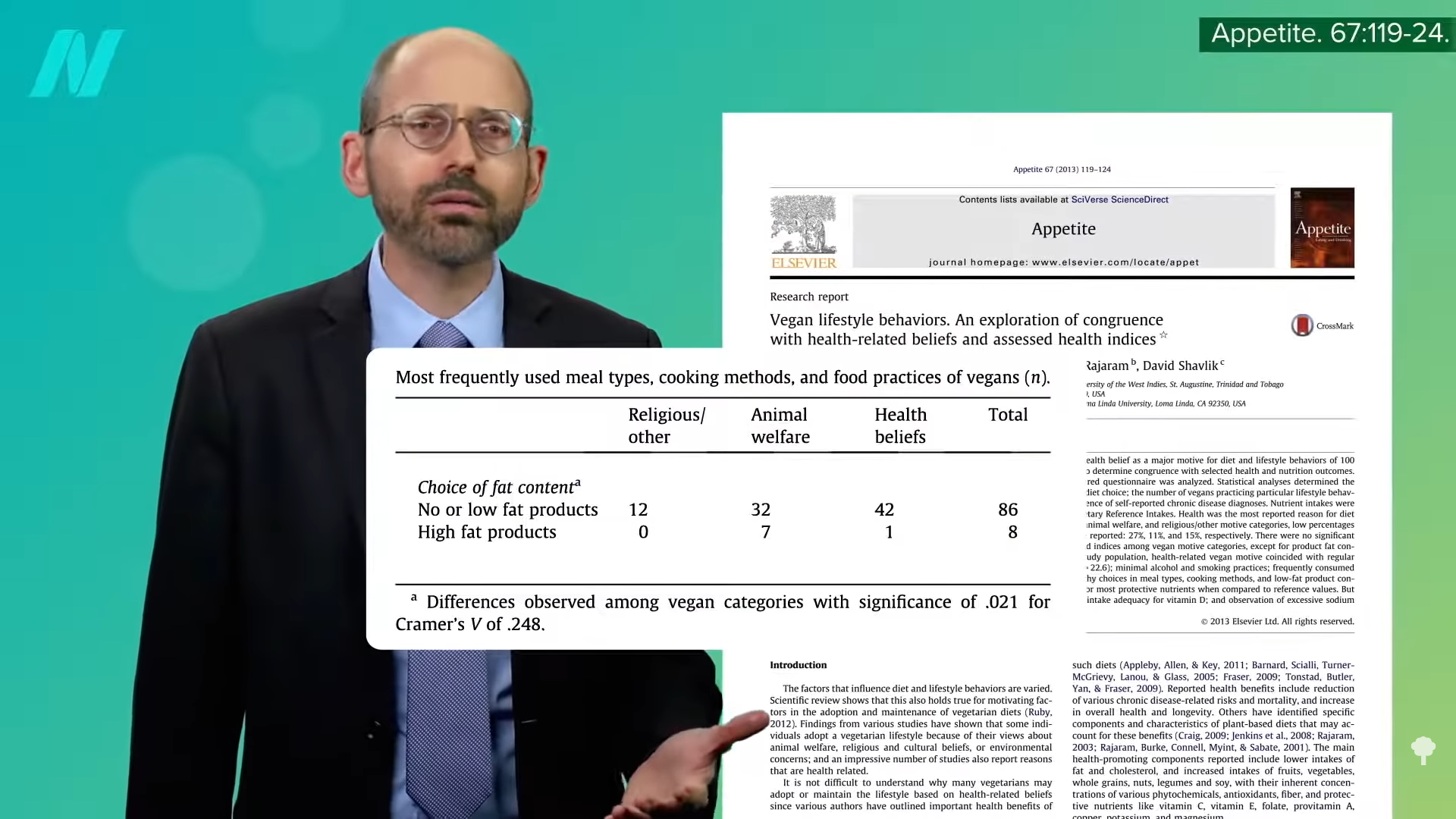
Some choose plant-based diets for other reasons, such as animal welfare or global warming, and it looks like “ethical vegans” are more likely to eat sugary and fatty foods, like vegan donuts, compared to those eating plant-based because of religious or health concerns, as you can see below and at 2:26 in my video.
The veganest vegan could make an egg- and dairy-free cake, covered with frosting, marshmallow fluff, and chocolate syrup, topped with Oreos, and served with a side of Doritos. Or, they may want fruit for dessert, but in the form of Pop-Tarts and Krispy Kreme pies. Vegan, yes. Healthy, no.
“Plant-based diets have been recommended to reduce the risk of type 2 diabetes (T2D). However, not all plant foods are necessarily beneficial.” In the pro-vegetarian scoring system I mentioned above, you get points for eating potato chips and French fries because they are technically plant-based, as you can see below and at 3:07 in my video, but Harvard researchers wanted to examine the association of not only an overall plant-based diet, but healthy and unhealthy versions.
So, they created the same kind of pro-vegetarian scoring system, but it was weighted towards any sort of plant-based foods and against animal foods; then, they created a healthful plant-based diet index, where at least some whole plant foods took precedence and Coca-Cola and other sweetened beverages were no longer considered plants. Lastly, they created an unhealthful plant-based diet index by assigning positive scores to processed plant-based junk and negative scores for healthier plant foods and animal foods.

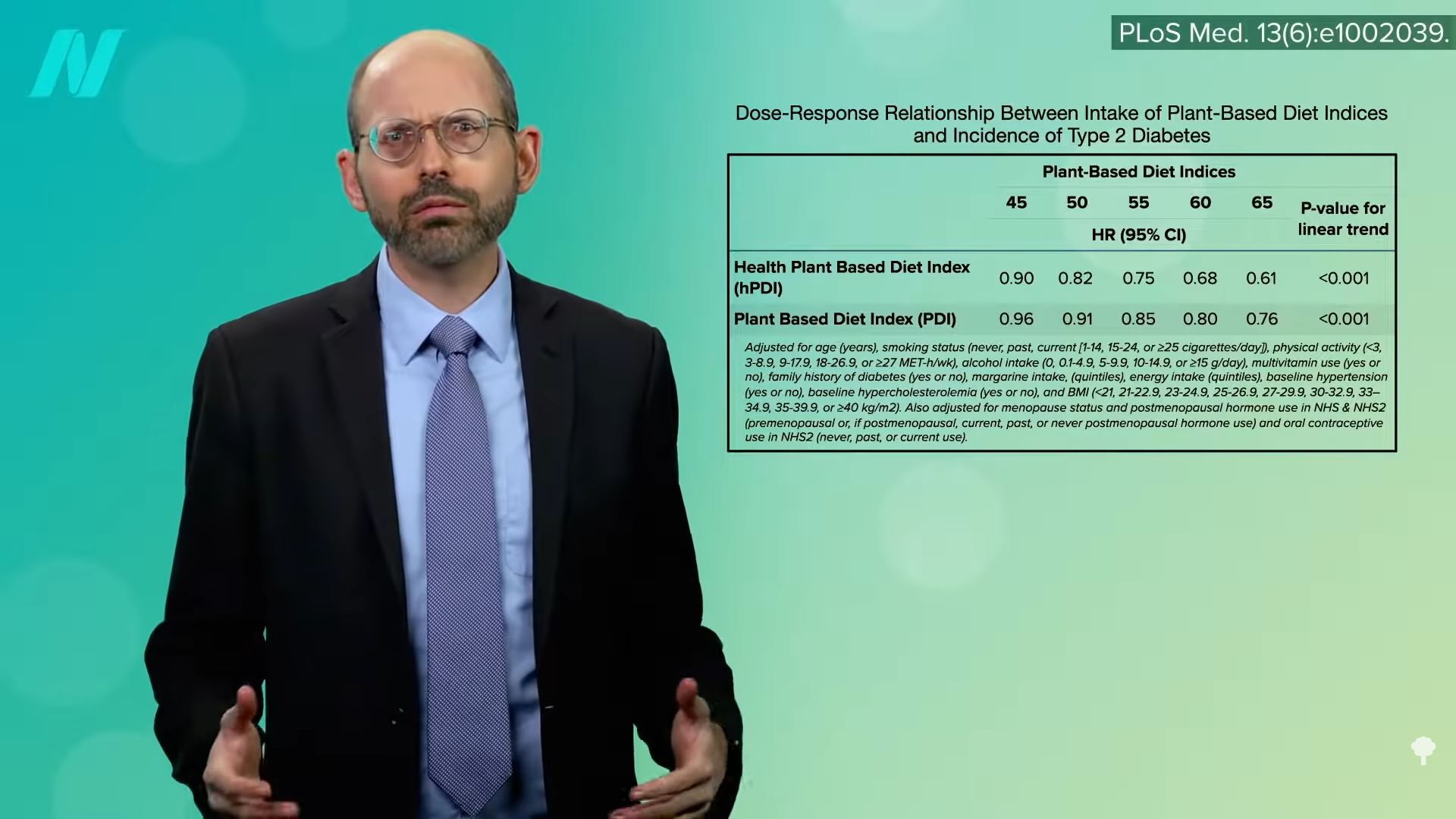
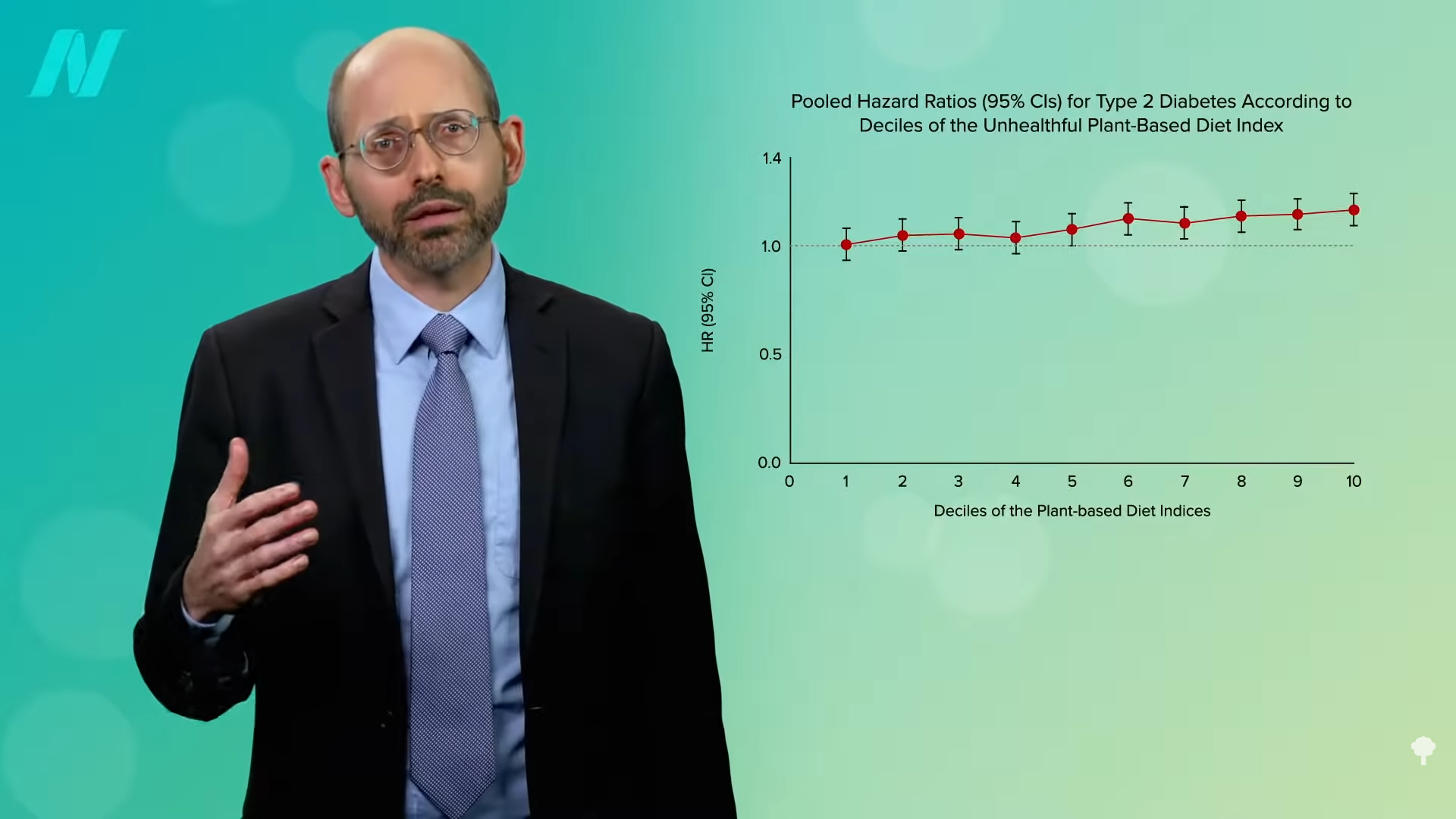
Their findings? As you can see below and at 3:51 in my video, a more plant-based diet, in general, was good for reducing diabetes risk, but eating especially healthy plant-based foods did better, nearly cutting risk in half, while those eating more unhealthy plant foods did worse, as shown in the graph below and at 4:03.
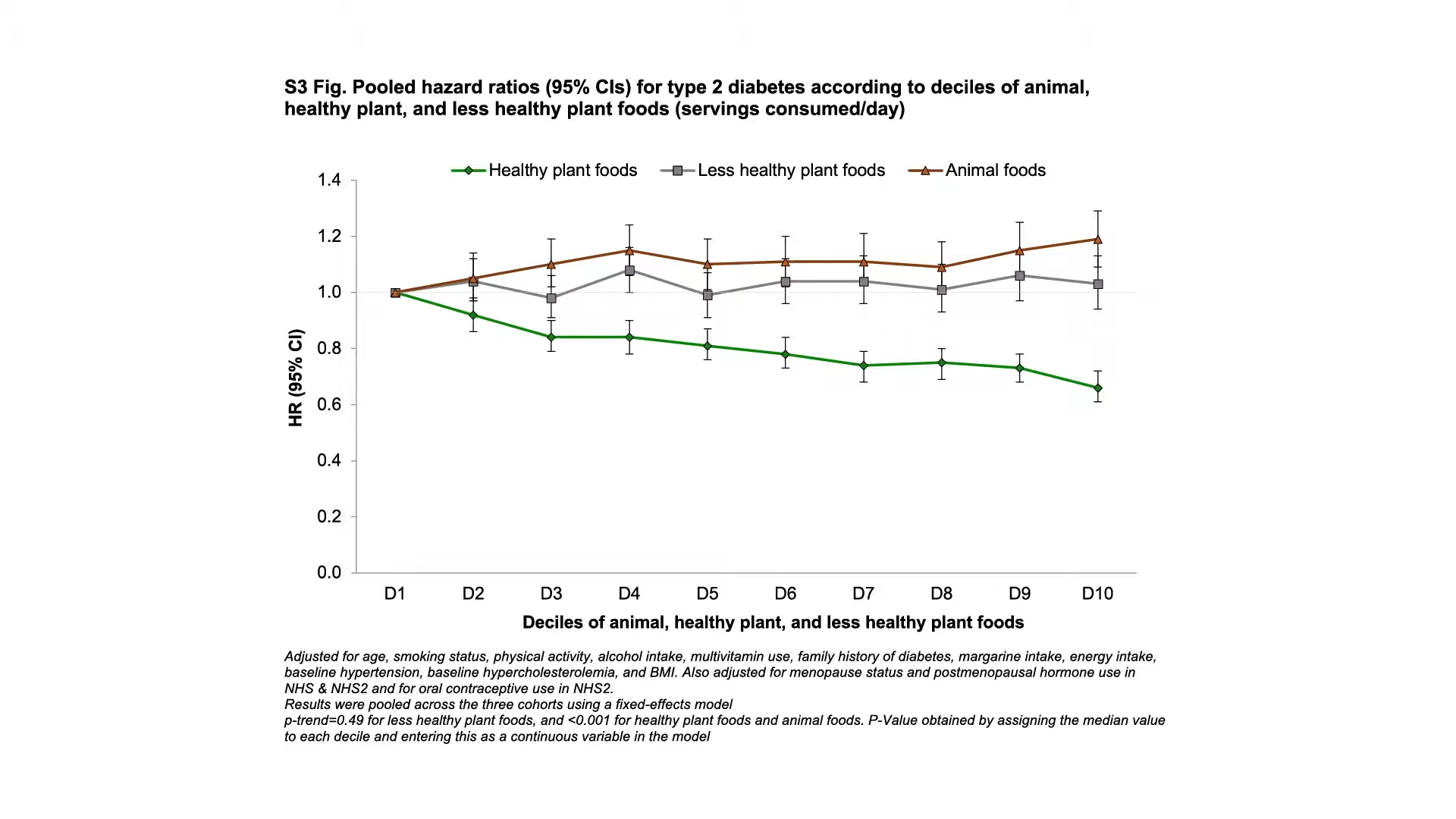
Now, is that because they were also eating more animal foods? People often eat burgers with their fries, so the researchers separated the effects of healthy plant foods, less healthy plant foods, and animal foods on diabetes risk. And, they found that healthy plant foods were protectively associated, animal foods were detrimentally associated, and less healthy plant foods were more neutral when it came to diabetes risk.
Below and at 4:32 in my video, you can see the graph that shows higher diabetes risk with more and more animal foods, no protection whatsoever with junky plant foods, and lower and lower diabetes risk associated with more and more healthy whole plant foods in the diet. So, they concluded that, yes, “plant-based diets…are associated with substantially lower risk of developing T2D.” However, it may not be enough to just lower the intake of animal foods; consumption of less healthy plant foods may need to decrease, too.
As a physician, labels like vegetarian and vegan just tell me what you don’t eat, but there are a lot of unhealthy vegetarian fare like French fries, potato chips, and soda pop. That’s why I prefer the term whole food and plant-based nutrition. That tells me what you do eat—a diet centered around the healthiest foods out there.
The video I mentioned is Do Flexitarians Live Longer?.
You may also be interested in some of my past popular videos and blogs on plant-based diets. Check related posts below.
Key Takeaways
To read the original article click here.